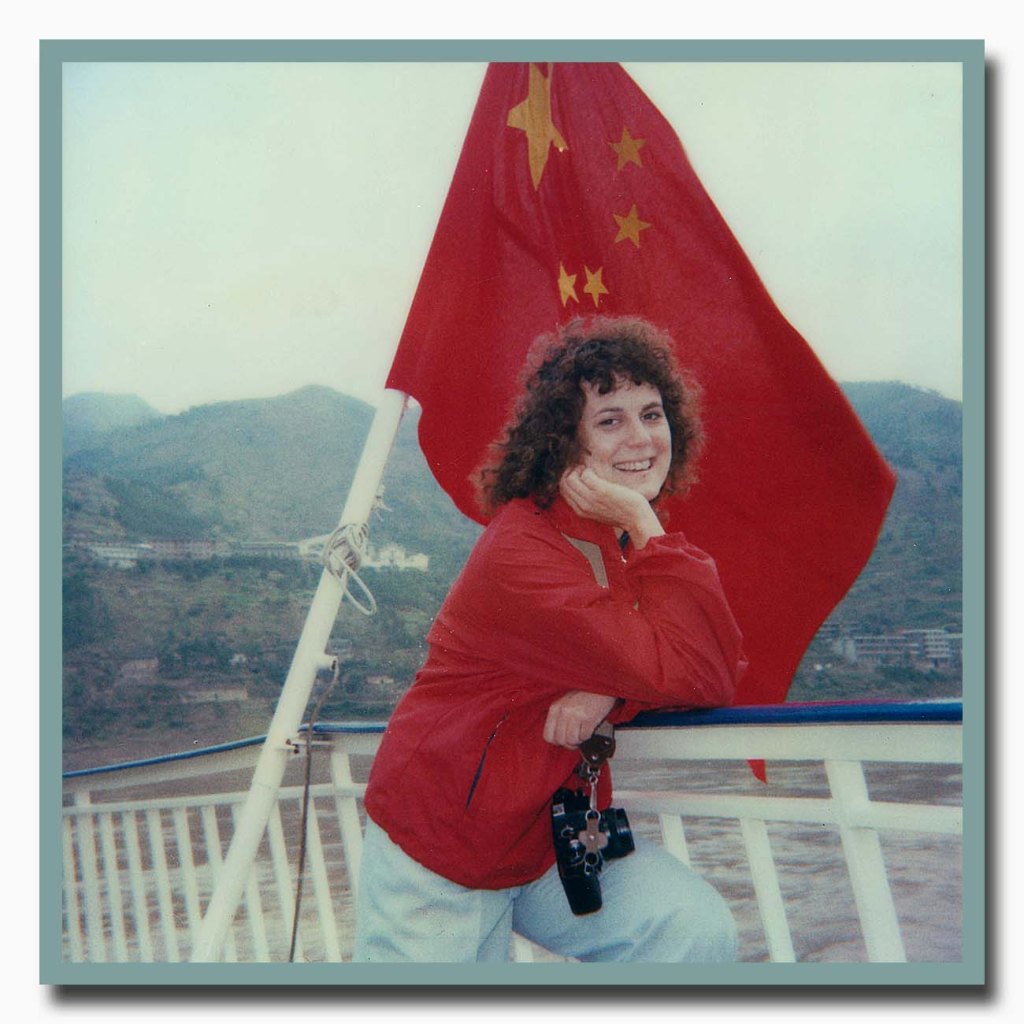
Part One begins in the fall of 1983 on my first night in Hangzhou, China. Five months after that first trip, I returned without the safety net of a tour, facing many rewards as well as challenges. My experiences in Tibet a year and a half later resulted in a deep knowing that if I could survive Tibet, I could do just about anything. My trip in 1986 culminated in my desire to share China with others and to study Mandarin Chinese.
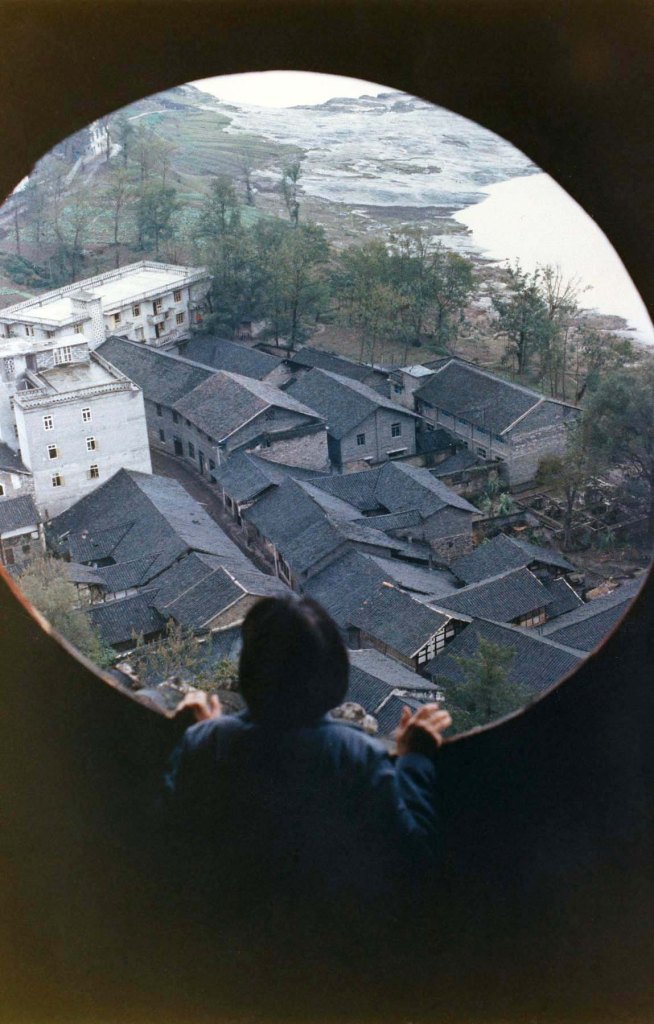
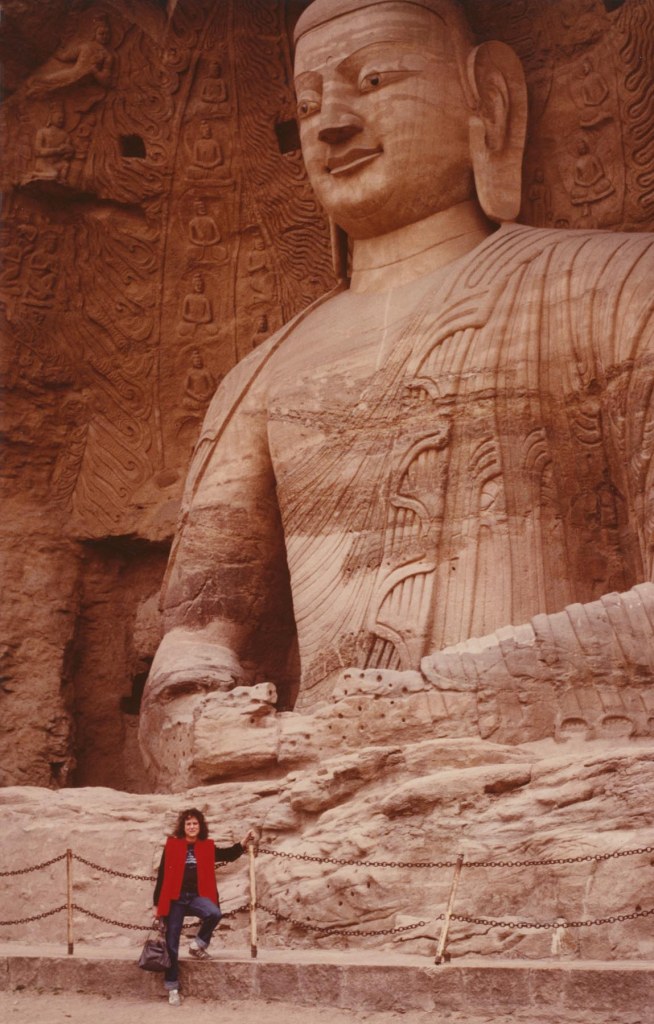
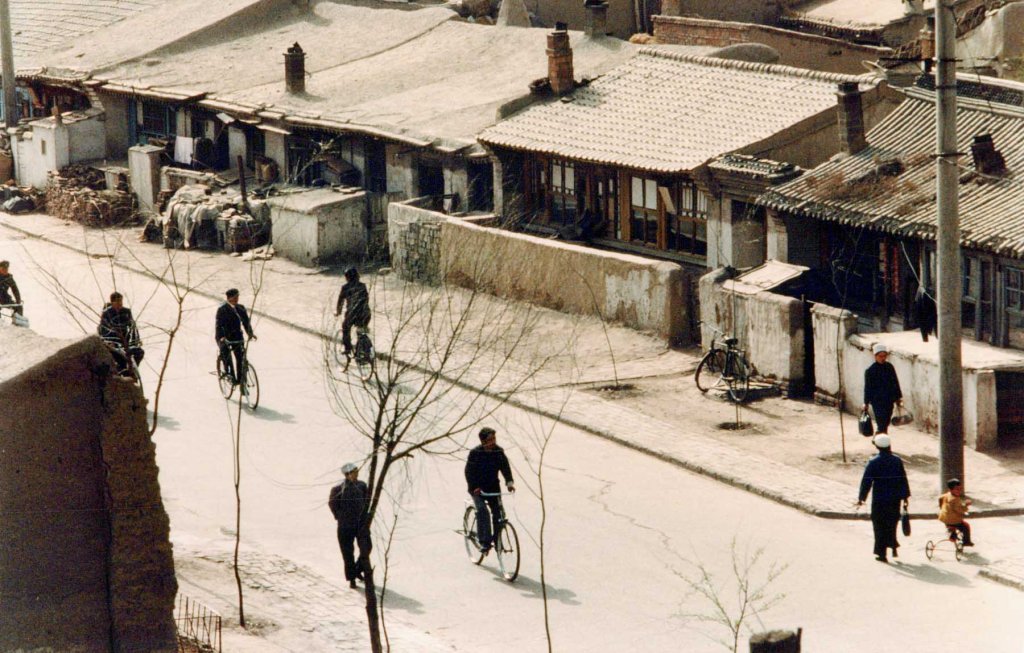
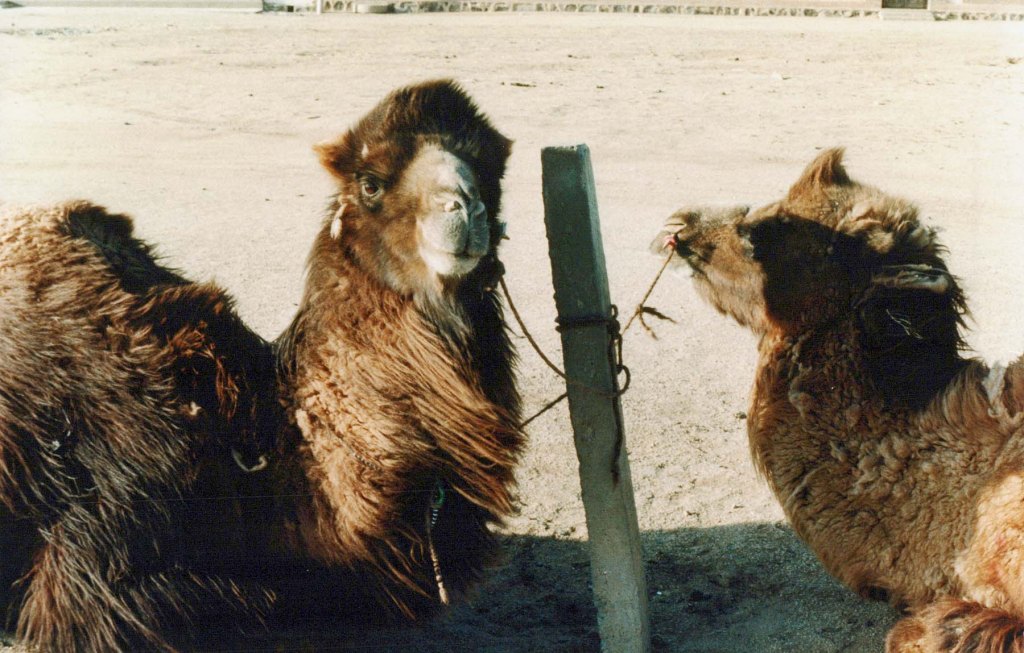
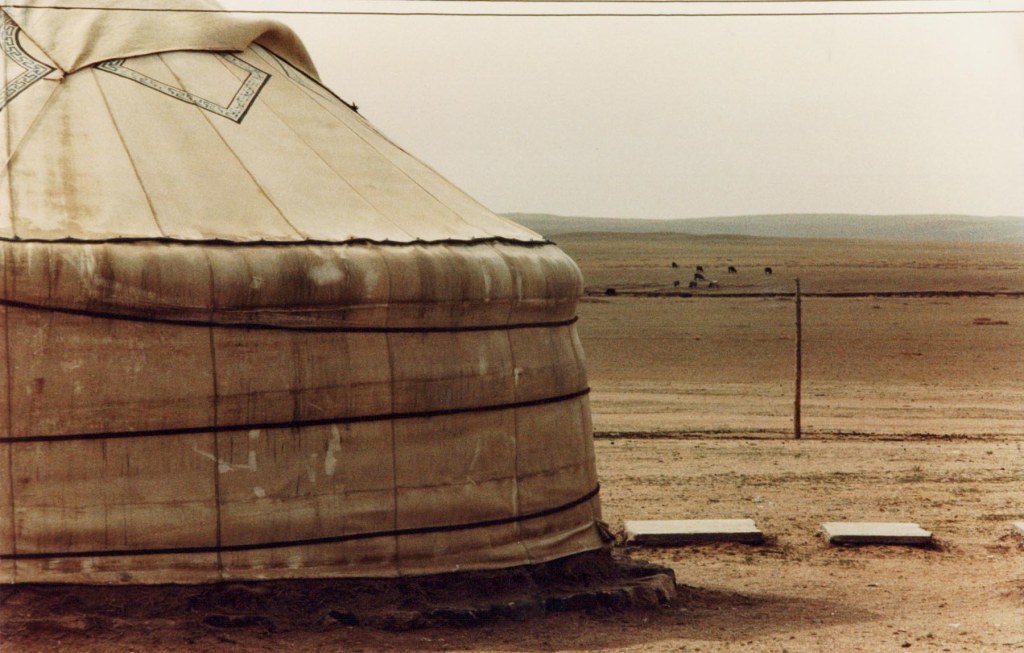
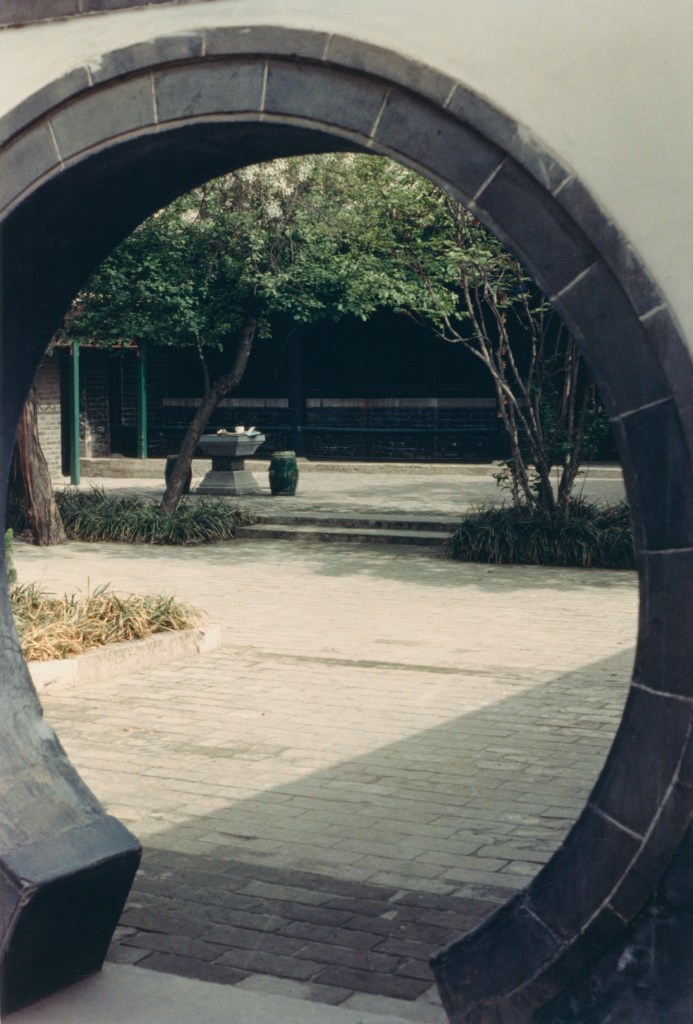
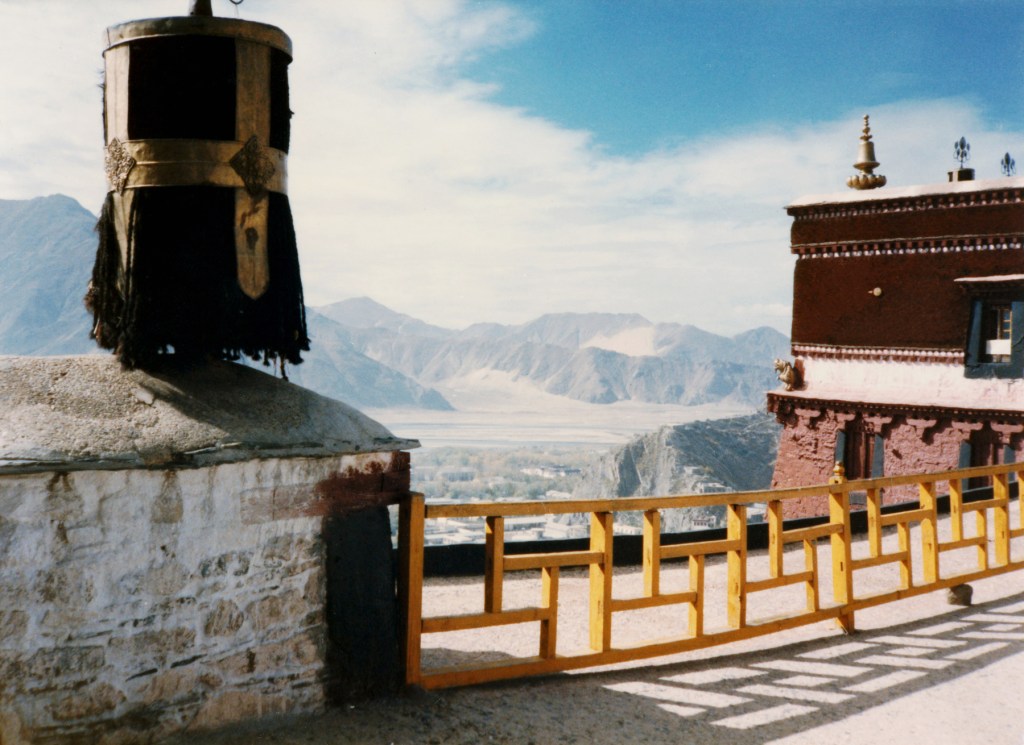
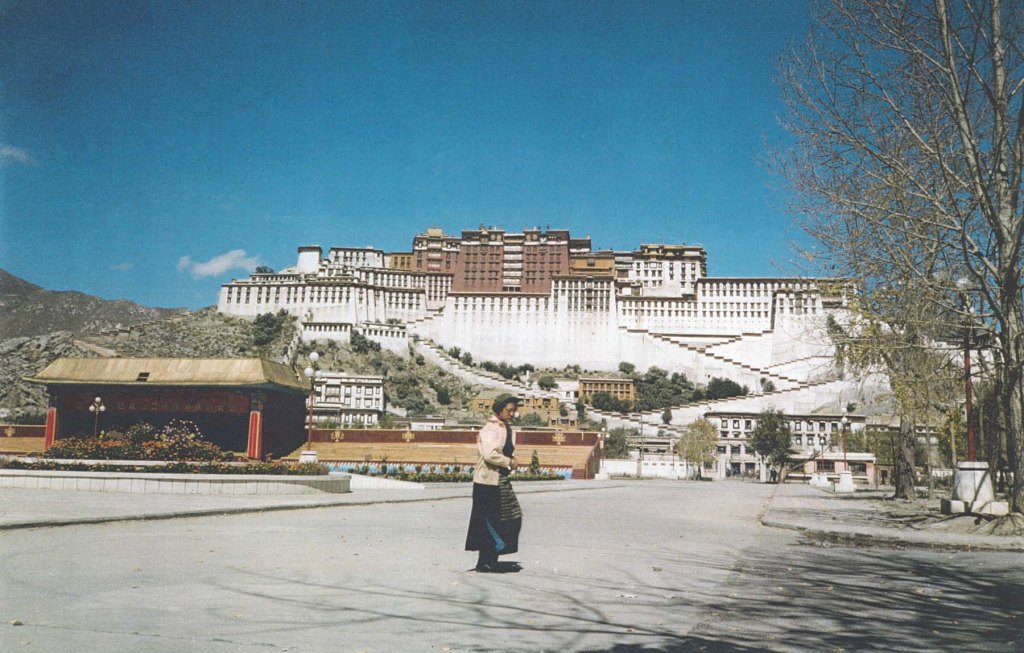
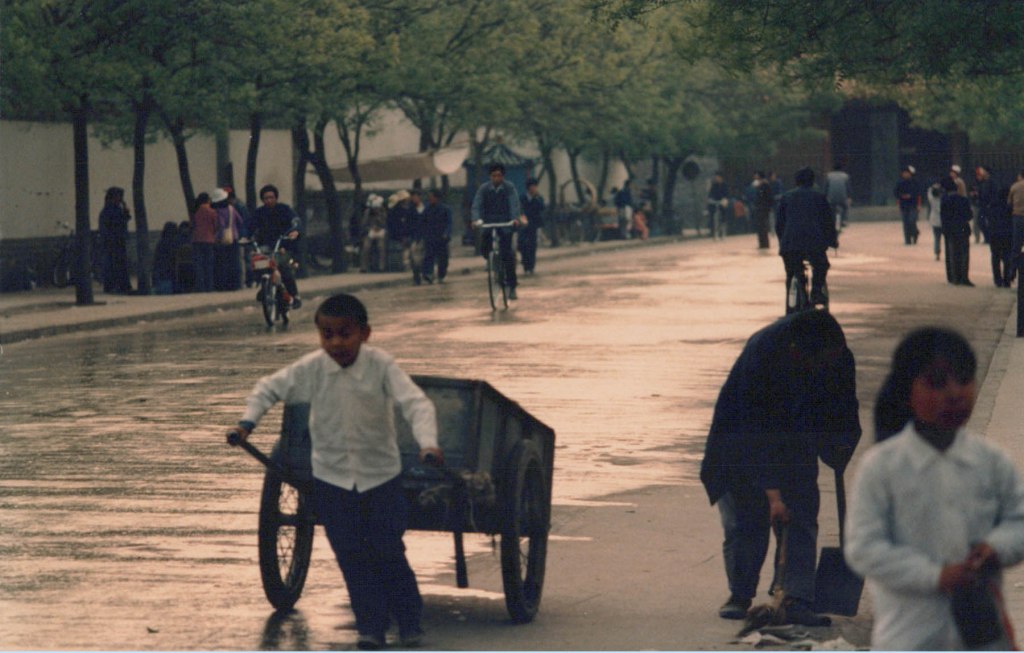
I turned part way up the stairs to take a last look through the circular window I had just passed. Standing in front of it stood a Chinese woman wearing a worn black jacket, her shoulders a little slumped, with her hands gently resting on the rounded opening. Her back was to me, so I could not see her expression. She lingered long enough for me to focus my camera and snap a picture. (p. 25)The outdoor towering sandstone Buddha did not disappoint. My photo with a serene smile mirrored the Buddha’s behind me. I must have felt satisfied with accomplishing my first on-my-own-sort of sightseeing adventure in China. (p. 45)We drove through a dun-colored town to the only hotel open to foreign visitors, the Datong Guesthouse, a huge establishment with over 200 rooms. (p. 46)I was exhausted and happy to be led to my yurt. A fire had been started in the stove with an exhaust pipe running through the middle of the round tent to a hole in the ceiling. I was the only guest in a huge yurt meant to sleep five women. Next to my bed of quilts stood the ubiquitous jug of boiled water. I had already brushed my teeth in the concrete hut and used its rudimentary bathroom, so I was ready to pour some boiled water in the glass tumbler I had asked for and close my eyes. The water should be perfect for a morning brush. I nearly froze to death that night. The attendant had not closed the flap surrounding the top of the exhaust pipe. Most of the heat generated by the stove below went through the opening, taking the warmth with it. I was alone, so as it got colder and colder, I collected one, then two, then three, then four quilts from the other beds to bury myself under. In the morning, I reached out from beneath my heavy barricade to find the water I had poured the night before frozen. (p. 50)I mustered my mental resources to get through a few days of viewing grasslands without grass. Mongolians on horses galloping through the grasslands in competition was not going to happen. I did get a good picture of resting camels, and the treat of snow-covered mountains off in the distance as we drove back to Inner Mongolia’s capital. (p. 50)I met a nice man in the hotel’s courtyard who invited me to join him on a private tour to the simple gravesite of Confucius (551 – 479 BC). (p. 52)Made up of two parts, the White Palace had been the residence of the Dalai Lamas, and the Red Palace still houses the Spirit Pagodas, the remains of past Lamas. (p. 72)On my last day in Lhasa, the sun shone against the bluest sky I had ever seen. I drank some hot Pepsi and cut open a watermelon in the park with the Potala as a backdrop. A Tibetan woman with the striped apron of the married walked past. I took a picture. I kept telling myself, “You are in Tibet. You did it.” (p. 82)Life on Qufu Street after part of the road has a wash. The little boy caught my eye pulling his load passing by an elderly woman collecting leaves in her pan. (p. 53)